
Lawn tips & guides
The $10 Soil Test That Saves Oklahoma Lawns Hundreds in Fertilizer
· 4 min read · Boss Mowing crew
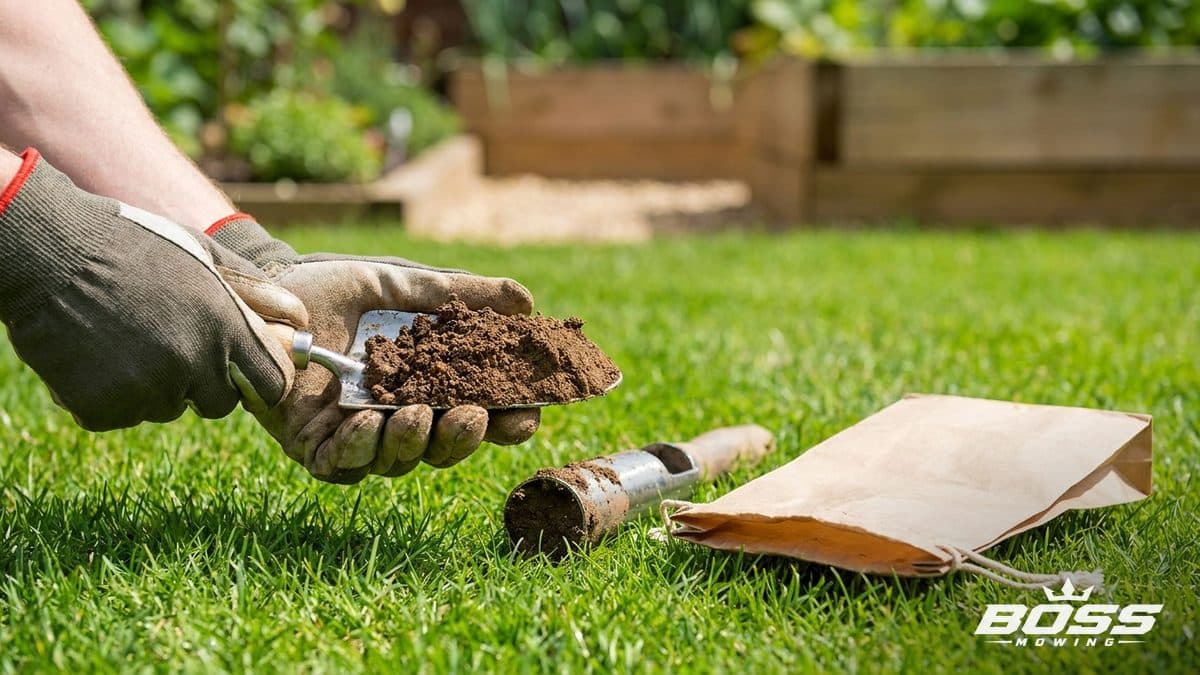
Guessing is the expensive option
Most struggling Oklahoma lawns aren't underfed — they're mis-fed. Dumping nitrogen on turf that's actually short on phosphorus, or fighting yellow grass that's really a pH problem, wastes money twice: once on product, once on the results you don't get. A basic soil test replaces the guessing with numbers.
Oklahoma's lab does this at scale
OSU's Soil, Water and Forage Analytical Laboratory in Stillwater runs more than 58,000 samples a year for farmers, ranchers, and homeowners. A routine lawn test — pH, nitrogen, phosphorus, potassium — costs about the price of one bag of fertilizer, and every county Extension office (Kay County's included) will take your sample and mail you the results with recommendations. OSU Extension's soil testing page walks through the whole process.
How to pull a sample that's worth testing
Use a clean trowel to take small cores about 6 inches deep from 10–15 spots scattered across the lawn, mix them in a clean bucket, and submit about a pint of the blend. One core from one corner tells you about that corner; a blended sample tells you about the lawn.
Skip spots that lie: right against concrete (lime leaches from it and skews pH), under the dog's favorite tree, or where you spilled fertilizer last spring.
What the numbers change
If pH is below about 5.5, lime unlocks nutrients that are already in your soil — often the cheapest single improvement a lawn can get. If phosphorus and potassium are adequate (they often are in established lawns), you can feed straight nitrogen and stop paying for the other two. Our treatment program starts from a soil test for exactly this reason — get one first, whoever ends up doing the work.
Rather have it handled?
Trace your lawn on the aerial map and get a real price in about a minute — or call (580) 304-9976.
Get my instant quote