
Lawn tips & guides
The Oklahoma Lawn Fertilizer Schedule That Actually Works
· 5 min read · Boss Mowing crew
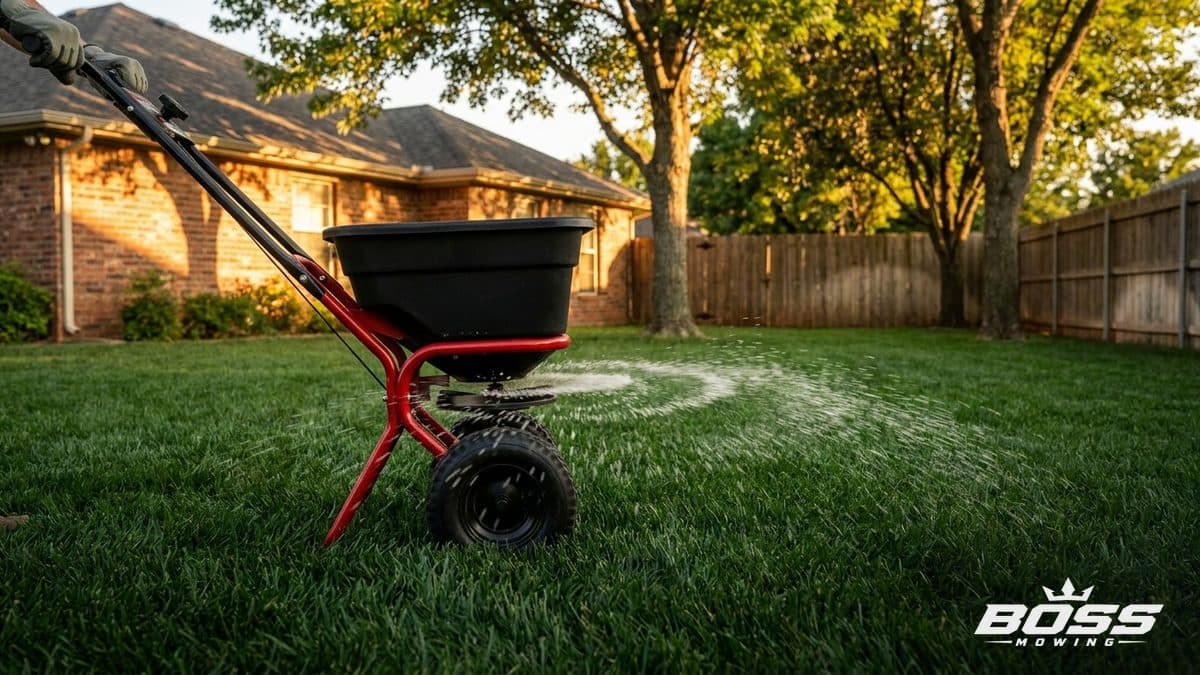
Late February–March: pre-emergent, not fertilizer
The most important 'feeding' of the year contains no food at all. A pre-emergent herbicide down by early March — before soil temps hit 55°F — stops crabgrass and foxtail seeds from ever germinating. Miss this window and you'll be fighting mature crabgrass with a hose-end sprayer all summer.
Local rule of thumb: get it down before the redbuds bloom.
May: first real feeding
Once the lawn is fully green and you've mowed actual growth twice, bermuda is ready to eat. A nitrogen-forward feeding in May fuels the thick, dark green flush that carries the lawn into summer. Feeding earlier than that mostly feeds the weeds.
June–August: little and often
Bermuda is a heavy feeder in summer. A light nitrogen application every 4–6 weeks through August keeps color and density up without the surge growth that doubles your mowing. Skip feeding during severe drought stress — fertilizer without water burns.
September: the skipped one that matters
A balanced feeding with potassium in early September is the one homeowners skip most — and it's the one that decides how well your lawn winters and how fast it greens up next April. Think of it as packing the lawn's suitcase for dormancy.
Don't push nitrogen past mid-September, though; late lush growth is frost-tender.
The licensed-applicator note
In Oklahoma, applying herbicides and fertilizer to other people's lawns for pay requires an ODAFF applicator license — worth asking about whenever you hire treatments out. If you're hiring it out, ask for the applicator's ODAFF license number before they spray.
Rather have it handled?
Trace your lawn on the aerial map and get a real price in about a minute — or call (580) 304-9976.
Get my instant quote