
Lawn tips & guides
Lawn Aeration in Oklahoma: What It Fixes, and When to Do It
· 4 min read · Boss Mowing crew
The problem: Oklahoma clay
Much of North Central Oklahoma sits on heavy clay that compacts under feet, mowers, and dogs until water sheets off instead of soaking in. Compaction starves roots of oxygen — Clemson Extension's aeration guide explains that roots need soil oxygen to turn photosynthesis sugars into growth energy. A compacted lawn is a lawn idling in first gear no matter how much you feed it.
What core aeration does
A core aerator pulls thousands of 2–3 inch soil plugs, opening channels for air, water, and fertilizer to reach roots. Iowa State Extension adds that it also fuels growth, helps limit disease, and controls thatch. One important detail from the research: it must be *core* aeration — spike aerators that just poke holes push soil sideways and can make compaction worse.
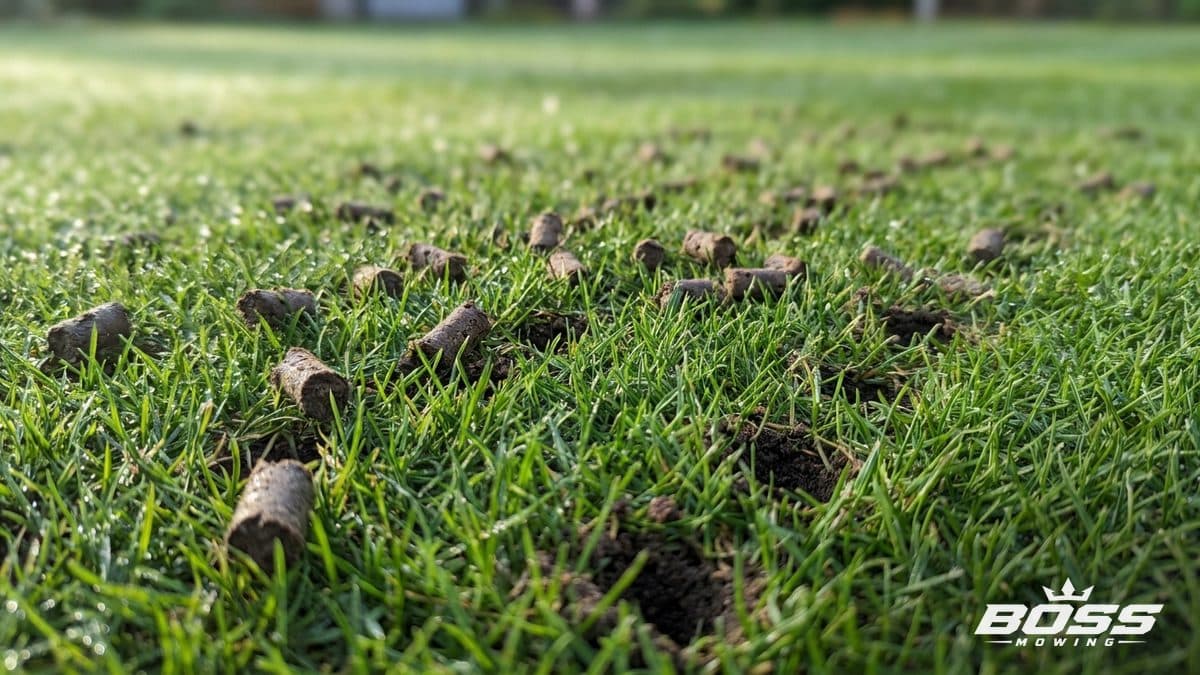
Those ugly plugs on the lawn afterward? Leave them. They break down in a couple of weeks and return the soil biology to the surface.
When: summer for bermuda, fall for fescue
Timing follows the grass. Warm-season lawns like bermuda should be aerated in June or July, when they're growing hard and can fill the holes fast. Tall fescue gets aerated in fall, usually right before overseeding. Aerating bermuda in March, while it's still dormant, mostly just aerates the weeds.
How often
High-traffic lawns (kids, dogs, parties) benefit from every year or two; quieter lawns every two to four. A quick self-test: if a screwdriver won't push easily into moist soil, your lawn is due. It pairs perfectly with a summer feeding — holes plus fertilizer is the fastest thickening combo there is. Want it on the schedule? Call (580) 304-9976 or start at bossmowing.com/quote.
Rather have it handled?
Trace your lawn on the aerial map and get a real price in about a minute — or call (580) 304-9976.
Get my instant quote