
Lawn tips & guides
How Short Should You Cut Bermuda Grass? (Scalping, Explained)
· 4 min read · Boss Mowing crew
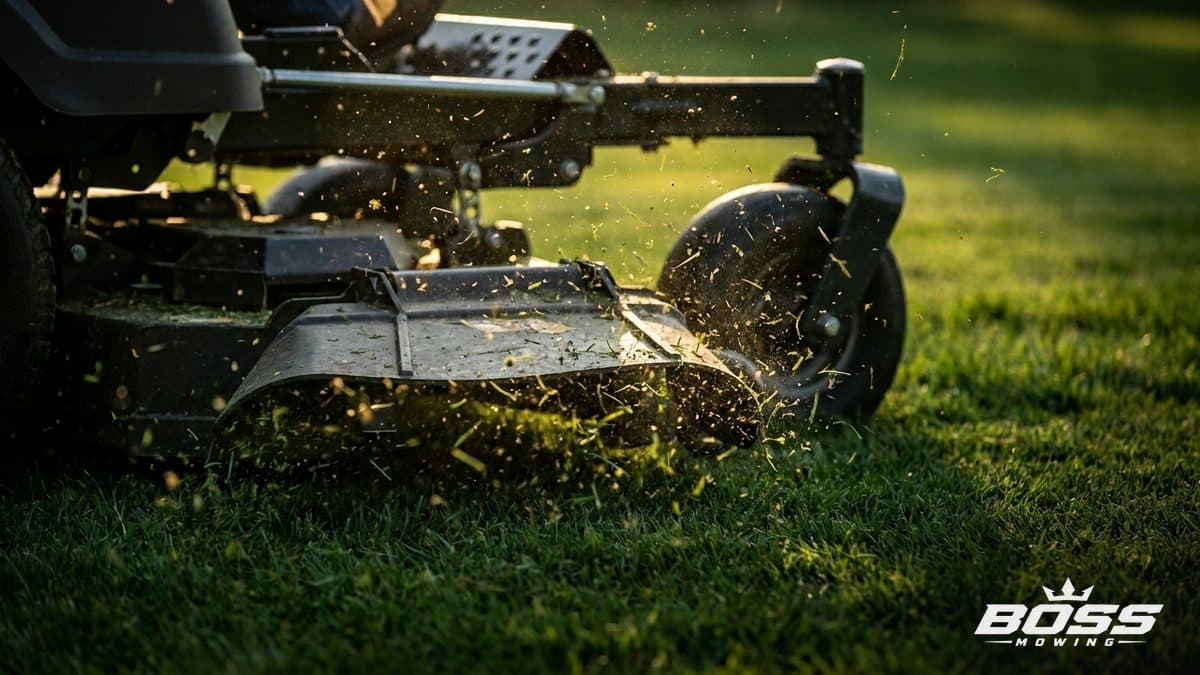
The sweet spot: 1.5 to 2.5 inches
Common bermuda looks its best kept between 1.5 and 2.5 inches. Below that range you need a reel mower and a putting-green obsession; above it, bermuda gets stemmy and thin at the base.
Within the range, taller is safer. Every extra quarter inch of blade is extra root depth, extra shade on the soil, and extra drought resistance in an Oklahoma July.
Why scalping mid-season backfires
Cut bermuda down to the dirt in June and you've done three things: stressed the plant into using stored energy, exposed the soil to 100°F sun, and rolled out a welcome mat for crabgrass. A scalped lawn browns out fast, and the weeds win the race back.
If the lawn got long — vacation, rain week, life — resist the urge to fix it in one pass. Take a third off, wait three or four days, take another third.
The one good scalp: early spring
The exception is the first cut of the year. Just before green-up (late March, early April), dropping the deck low and bagging the dead winter top-growth helps the soil warm faster and the lawn green up a week or two earlier. It only works while the lawn is still mostly dormant — once it's green, the window's closed.
Blade sharpness matters more than height
A dull blade tears grass instead of cutting it, and every torn tip goes tan within a day, giving the whole lawn a gray-brown haze. If your lawn looks dull three days after mowing, that's the blade talking. We sharpen ours constantly — it's half the reason a professionally striped lawn pops the way it does.
Rather have it handled?
Trace your lawn on the aerial map and get a real price in about a minute — or call (580) 304-9976.
Get my instant quote